Being in the marine science and conservation space can feel a lot like a Sisyphean task: everything is an uphill battle. To start, there’s actually landing a job in one of the most sought-after and competitive fields, then keeping it through contractual obligations, term fulfillments, funding cuts, budgetary restraints, extremely long hours, adverse weather conditions…
All of this seems like a lot. And it is. But most of this could be said for many other industries.
No, what leads to burnout for not just marine science folks, but to those in the environmental conservation field as a whole, is unique to this industry.
I got in the marine science and conservation space because I want to make a difference. I saw the plastic on the beach, the sea turtles (and fish and dolphins) suffering from pollution related diseases, and decided to dedicate my life to making the world a better place.
Starting out, I got into marine science not necessarily for the science part, but because I saw the heavy impacts we humans have on our oceans, and wanted to do something about it.
And it worked.
After running the gauntlet of actually landing a job in my chosen field (a test to burnout in and of itself), I found that the job, and the things adjacent to it, consumed my thoughts morning, noon, and night.
For most folks, being a marine biologist (or anything natural sciences related) is a career of passion. We see things that mainstream folks miss, and are driven to create positive change for our planet. When our calling becomes our profession, it can be a slippery slope to being able differentiate between who you are as a person, and the job title you hold.
The thing about the marine science and conservation world is that there is quite a lot to keep track of: policy changes, funding cuts, exploitation disguised as exploration. All of this can feel like very strong opposition against the mission of living in more harmony with the planet— and that, for most folks in this space— is what we’re trying to do.
As a result, there’s this persistent feeling in our work of not doing enough, not being enough, not contributing enough. Pop on Instagram or Youtube, and even sometimes email, and you’ll immediately see hundreds of videos and messages from people who really care about the planet and her denizens, trying to get the word out about some atrocity occurring. Spinning sawfish, disoriented stingrays, bleaching coral… the list is endless. And it happens every. Single. day.
This industry is not like insurance, for example. Sure, people who are in the insurance industry care about their jobs, their clients, how things are changing but, at the end of the day, they get to go home and not think about insurance.
They’re not staying up late watching documentaries on the state of the insurance industry, or Doom Scrolling Instagram watching endless content of insurance scams and how to file a better claim.
Insurance just isn’t that interesting— it would likely put them to sleep.
So why is it that we do it?
We will stay up late at night watching documentaries not just about how wonderful our planet is, but how horrifying certain aspects are: the seafood industry, trawling, shark finning. We get on social media and become enraged at the photos and videos we see of remote islands covered in plastic, or the impacts of the shipping industry on whales, or the latest bleach watch report. We see and measure and become first-hand witnesses to this change in our own jobs— and it has an undoubted impact on our psyche.
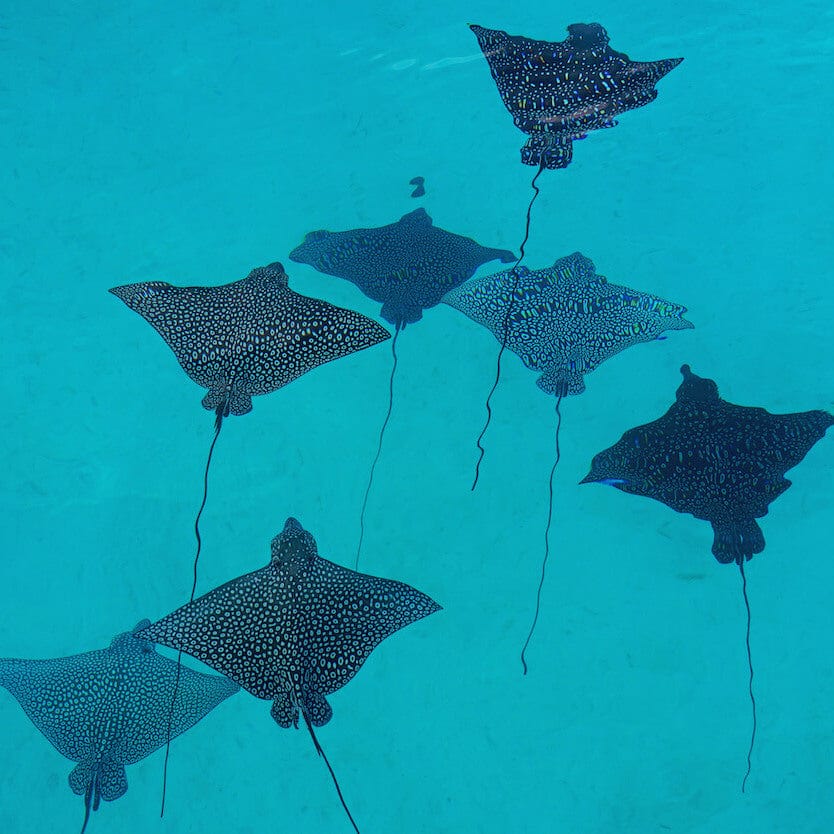
Helping with research for the Florida Manta Project. Photo by Bryant Turffs
This distress is so acute, psychological scientists have given it a name: Solastalgia. It’s the missing or wanting of something that’s changed. As it relates to this conversation, solastalgia is the missing of our home environment— the weather patterns we experienced in our youth, the coral heads that are no longer alive, the species that have been wiped out. The anguish those in the natural sciences experience is because we have a deep connection to what it is that we do. Our careers are more than work, more than a job; they bleed over into the space of our identities.
For me, this connection to the ocean and the planet as a whole feels like a responsibility. The ocean provides over half of the air that I breathe, the earth gives me life-sustaining food, shelter, and a playground to enjoy. It feels wrong to take and take, and not give back. So, I created a career of finding that balance.
But there is a tipping point. A point where it all feels too much, we become jaded in what we do, or burnout sets in. There are so many fires to put out, and only one me.
Whenever I feel this sense of creeping angst about the state of the world, there are a few tricks I like to do to reset:
Take care of the human. We have basic biological needs that, when ignored, can lead to crankiness at best, and medical issues at worst. Sleep. Eat nourishing foods. Move your body. Drink more water.
Play. This ties into the above. We’re creatures wired for play (and if you need help remembering this, borrow a kid for a day). Reset by doing the things that you love to do. Phone a friend. Laugh. Go do the hobby that you say you love to do but never seem to have time for.
Go micro. Appreciate the little things. Take time to smell the flowers, literally. Find something small that you love about where you live: it could be a special piece of art on the wall, or a specific local park outside your house.
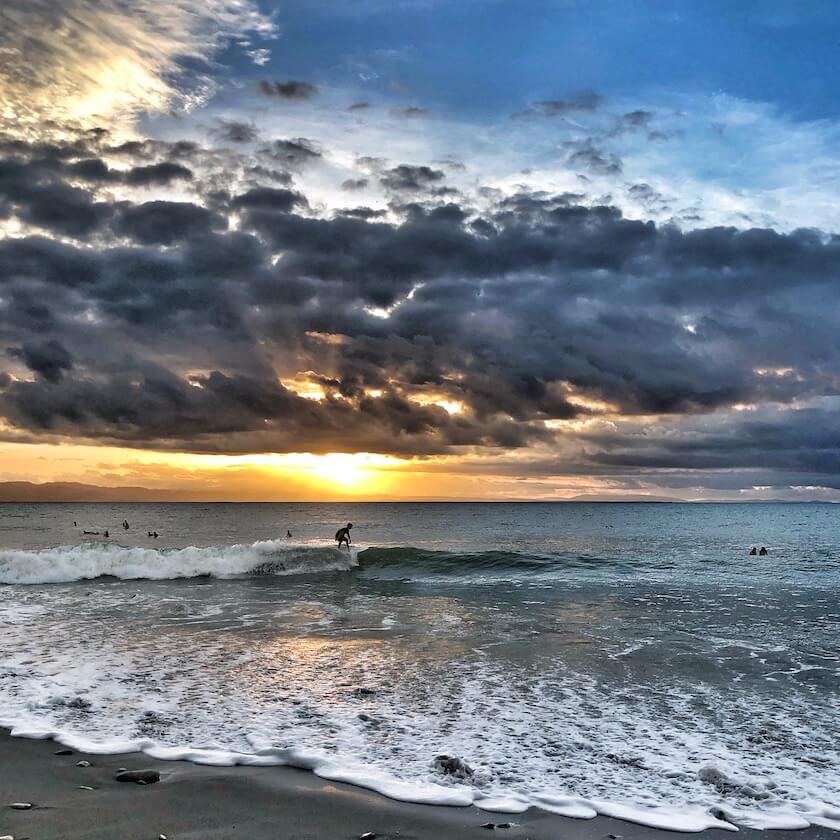
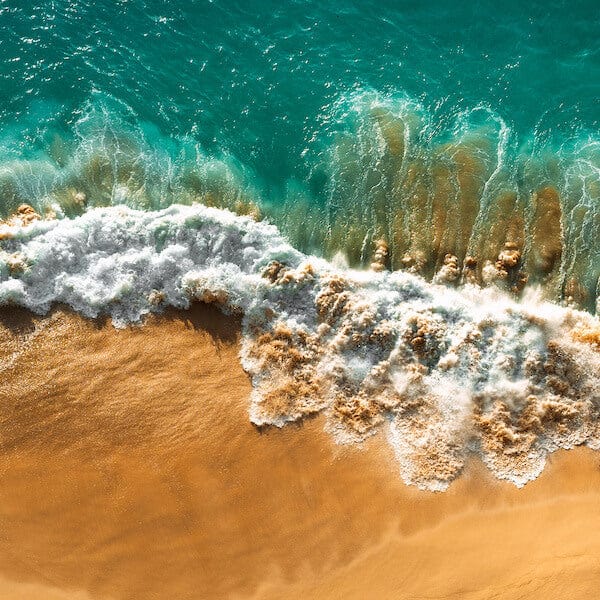
Find a spot in Nature. It could be in your backyard, at a park, at the beach. Wherever it is, find a spot that makes you feel like the rest of the world is far away, and visit it regularly. Notice what’s changed with the seasons, what’s remained the same. For me, the beach is this spot, and I love noticing how different the ocean looks, and who’s popping out of the water.
Read good news. (And turn off the regular stuff, at least for a little while). If being “in the know” is making you feel anxious, stressed, or like the weight of the world is on your shoulders… it’s time for a break. If you feel like you must have a daily news fix, there are entire websites dedicated to sharing only positive news. Give one of those a try.
Burnout is real. And it can turn us into people that are over-taxed, anxious, and strung out. None of which is helpful to us or to the ocean. In order to take care of the planet, we have to take care of ourselves, for the two are inextricably connected.
We do what we can with the time and resources we have. At the end of the day, we get to lay our heads down at night and know that we’ve made the world a bit better, and more beautiful for being in it. We’re allowed to enjoy the ride, and know that as individuals we may be small, but there are thousands of people across the globe who really care, who are working hard to make a difference. That knowledge alone is enough to offer a balm for the burnout, a glimmer of hope.
I’d love to know: what do you do to keep hope alive and burnout at bay?
Kara Grace Muzia is the host of the So You Want to Be a Marine Biologist podcast, where she dives into ocean science, conservation, and careers. With a background in marine biology, she now focuses on helping people connect more deeply with the ocean through writing, teaching, and storytelling. Based in Florida, she spends her time writing and playing in the ocean, ideally with her husband and two daughters. Find more at karagracemuzia.com.
Nearly 40 yrs ago, I got scuba certified and began diving different parts of the world – Adelaide, the Great Barrier Reef, Cozumel and the Caribbean islands, Hawaii, New Zealand and many South Pacific locations. I saw the most amazing things. But as coral bleached, fish decreased, dive shops got less careful, and storms began to absolutely ravage coastal areas, I gave up diving. Now, to commune with nature, I go for a hike on the prairie, sans phone, and watch wild horses and bison grazing. I watch the prairie change through the seasons, with different plants blooming and different birds migrating through. On rainy days, I go to the movies, eat popcorn and let the story on the big screen carry me away to a different time and place. I miss diving terribly, but even a day at the beach calms my spirit and gives me hope that the earth and its life force is resilient enough to overcome the problems we have bestowed upon it.
I spent 40+ years working for natural resource agencies, retiring as a National Park ranger. Your post resonated deeply with me.
Las year I became overwhelmed & broken hearted over what is being done – & not done – to the environment. I went back to my roots & I spent time rereading, visiting & reflecting on early pioneers in the environmental movement. They were fighting battles then, & it will always be a battle to protect the earth that we love.
I am pushing back & standing up whenever I can.
I pay attention to the glorious array of birdlife in my neighborhood as I walk my Border Collie in the morning. The birdsongs and sightings of species like Woodpeckers, Cardinals, Warblers, Ospreys with fish in their talons make me giggle and exclaim the wonders of my higher power. The challenge of spotting them or recognizing their calls gives me courage to continue to put one foot in front of the other and divert my mind from dwelling on the negative.
I take a nap (in the sun if possible – 10 minutes a side), and go somewhere else, entirely. Currently, I go to Aretia, as I fall asleep to Rebecca Yarros’ Empyrean Series on Audible. It’s complete fantasy but has its own empowering themes that help me recharge.