













Our business has a paradox. We exist to help the environment, but creating products comes with an environmental cost. No slick marketing lingo or greenwashy gimmicks will make that go away. Making “stuff” always impacts the environment.
So what can we do?
Our philosophy is simple: to only make functional products that fulfill a need in your life and to reduce the environmental impact of those products as much as we can. We never run sales or promotions that encourage purchasing anything you don’t need, but when you do inevitably find yourself in need, we want to provide you with an option that is made as thoughtfully as possible, and serve it with a side of purpose, advocacy, education, and fun.
To explore the environmental impact of our business, we use the framework outlined in the 2021 working paper “Roadmap to net zero: delivering science-based targets in the apparel sector”.
That study outlines 8 sections of the apparel value chain that impact the environment in different ways. They are:
1: Raw material extraction
2: Raw material processing
3: Material production
4: Finished production assembly
5: Office, Retail, Distribution Centers
6: Consumer Use
7: End of Life
8: Shipping
Below, we will outline what specific steps we are taking to reduce our environmental impact across each category.
1: Raw material extraction
Material extraction is the process of creating the raw materials we use in our products. For us, that is primarily recycled polyester (RPET) and organic cotton. Our RPET is made by our manufacturing partners, Repreve, out of post-consumer bottles in the United States and is Global Recycled Standard certified. Global Recycled Standard is a voluntary product standard for tracking and verifying the content of recycled materials in a final product. The standard applies to the full supply chain and addresses traceability, environmental principles, social requirements, chemical content, and labeling. Learn more about it HERE. We use RPET instead of virgin polyester because peer-reviewed studies show it produces fewer emissions by utilizing existing materials.
Our organic cotton meets the Global Organic Textile Standard (GOTS), which is widely regarded as the gold standard for organic fiber certification. GOTS is the worldwide leading textile processing standard for organic fibers, including ecological and social criteria, backed up by independent certification of the entire textile supply chain. Learn more about it HERE. Our cotton is currently grown in India and certified by Oregon Tilth. Organic cotton is grown largely by relying on rain, using far less water than irrigation, is farmed without harmful chemicals or pesticides, and produces less CO2 compared to conventional cotton.
2: Raw material processing
Raw material processing is the magical adventure of turning raw materials into what is called an intermediate product, or, in our case, turning chips of RPET and bundles of cotton into fibers. Our RPET fibers are manufactured in North Carolina by a company called Repreve. We’ve worked with them for 10 years and value their deep commitment to traceability and transparency. Using their proprietary fiber traceability technology, we can take any RPET product we’ve made from their material, bring it to their laboratory, and confirm under a microscope that it came from their facility. This is incredibly important because it enables us to confirm that no shenanigans are happening further down the supply chain. These RPET fibers are also OEKO-TEX® STANDARD 100 certified, a certification that our fabric is free of harmful substances. These include over 1,000 known harmful substances, including banned azo colorants, pentachlorophenol, perfluorinated substances (PFAS, PFCs), cadmium, lead, and also harmful chemicals that are not yet regulated legally. You can learn more about this standard HERE.

3: Material Production
Material production is the process by which fibers are woven or knit into fabric. Much of the mystical sorcery that makes Waterlust products perform so well happens at this stage. Our RPET fabrics are made from OEKO-TEX® STANDARD 100 certified fibers at textile mills in North Carolina and California. We work with different mills because each has specialized technology that is more suitable for the specific kind of fabric we’re trying to make. Along with their technical skills, we prioritize mills that are geographically closest to our fiber manufacturing partners to reduce the distance materials need to be transported, which reduces overall emissions.
Our GOTS-certified organic cotton yarn is knitted into fabric and finished at textile mills and cut-and-sew facilities in California, all managed through our partner Farm Fresh Clothing Company, a family-owned, female-run business in Sebastopol, California. Farm Fresh’s entire garment supply chain — from textile mill to cut and sew — is located in California with licensed garment manufacturers that meet and regularly exceed California’s strict labor and environmental laws. We work with Farm Fresh because we appreciate their commitment to quality, fair wages, and worker wellbeing. Farm Fresh is a member of the Fair Labor Association, which bans child and forced labor, demands a living wage, protects workers’ right to organize, and ensures safe working conditions throughout the supply chain.
Our organic cotton fabric is knitted and dyed at Farm Fresh’s textile mill in California. Farm Fresh uses only GOTS- and/or Bluesign-approved reactive dyes, dispensed precisely using modern automated equipment. This protects workers and uses a low 1:4 ratio of fabric to water, significantly more efficient than the industry-standard 1:10 ratio, helping to conserve California’s water supply.
4: Finished Product Assembly
Product assembly encompasses the processes associated with combining the intermediate products (fabric, buttons, zippers, etc.) into a final product. Our RPET garments are printed, cut, and sewn at manufacturing partners in Central America. We work with partners in Central America for two primary reasons. First, they have significant expertise in apparel manufacturing and can consistently produce garments of the highest quality. In our earliest years, we worked with multiple partners in the United States and experienced significant problems with poor sewing quality and consistency. Secondly, Central America is geographically close to our fiber manufacturer, mills, and design office location in Miami. This enables us to reduce the geographical footprint of our supply chain, which helps reduce overall emissions. We vet and choose our partners carefully for fair labor practices and visit the factories we work with personally.

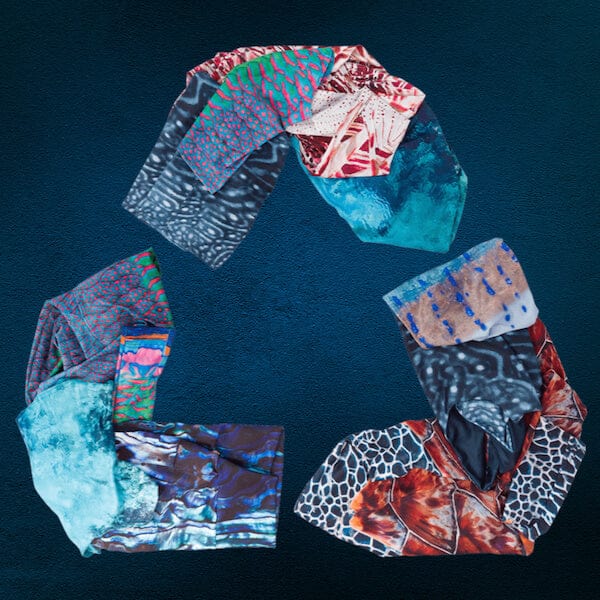
Our RPET products are printed using heat transfer sublimation, a printing technique that is widely considered to be the safest for both workers and the environment. Heat transfer sublimation requires no water, eliminates dye from entering water systems, and minimizes ink and fabric waste. All the inks and dyes we use in the sublimation process are also OEKO-TEX® STANDARD 100 certified. We only print the fabric that is used in the garment itself, as opposed to printing the entire roll, cutting out the pattern, and discarding the rest. We align the patterns as close together as possible and use the leftover scrap fabric to make headbands and scrunchies, which reduces the amount of wasted fabric significantly.


Our organic cotton products are screen-printed and sewn in California by our partner Farm Fresh Clothing Company at their Sebastopol facility, which runs on 100% renewable, locally generated solar and geothermal electricity. Farm Fresh specializes in water-based printing using Matsui inks, which have achieved Oeko-Tex ‘Eco Passport’ and ‘ZDHC Level 3’ certifications and are free from harmful substances, including lead, cadmium, mercury, azo dyes, and phthalates. Farm Fresh was also the first print shop on the West Coast to offer Living Ink’s Algae Ink, a carbon-negative black print made with pigment from spirulina.
5: Office, Retail, Distribution Centers
We are currently a company of four individuals (mostly family), working from home or coworking space in Miami and Rhode Island. We don't maintain a dedicated office or retail space, and we ship our products through a 3rd party distribution center.
Our 3rd party distribution center is a small family-run business currently pursuing B-Corp certification, based in Pennsylvania. We chose them because they share the same values as we do, prioritizing sustainability and fair labor practices (fair pay, flexible hours, a thriving culture, and a diverse workforce).
We are B-Corp certified, a 3rd-party assessment that evaluates our overall environmental management practices as well as our impact on the air, climate, water, land, and biodiversity. It also independently evaluates our labor practices, worker policies, and community impact across our supply chain. This includes the direct impact of our operations and, when applicable, our supply chain and our distribution channels. You can find our B-Corp assessment HERE.
We are committed to fair wages, safe working conditions, and the dignity of every worker across our supply chain. This means: no child labor, no forced labor, freedom of association, safe workplaces, and payment of a fair wage at every tier of production.
6: Consumer Use
The majority of emissions produced by a garment are those associated with laundering it. While we can’t control how frequently and with what methods our customers wash their clothes, we can develop fabrics that require less energy-intensive maintenance. Our RPET products utilize anti-microbial and quick-drying technology that is achieved by extruding the fiber and knitting/weaving it together into a fabric in a specific way. We do not use any coatings or chemical treatments. These characteristics mean that our products don’t need to be washed as frequently and can be easily line-dried in lieu of an energy-intensive drying machine.
7: End of Life
We prioritize making high-quality, long-lasting products to extend their life cycle, and always consider their end of life when we're making decisions about what to make our products from. All of our synthetic fabrics are engineered with sufficiently high RPET content so that they can be easily recycled into new RPET fibers at the end of their life. We keep synthetic and natural fibers separate in order to design for either easy recyclability or proper biodegradation. We conduct our garment recycling using Unifi’s Textile Takeback program, and motivate our community to send us their old Waterlust clothing through financial incentives. We use the black fibers that are produced from this second recycling process in various products.
8: Shipping
Transporting intermediate products between each of the above sections of the supply chain produces emissions and packaging waste, as does shipping the final product to you. To reduce these environmental costs, we minimize our packaging materials, work to shrink the total geographical footprint of our supply chain, and prioritize higher-efficiency shipping options. While the specific details of a shipping route can impact the best transport option, it is widely accepted that cargo ships are the most fuel-efficient and airplanes are the least, with trains and automobiles falling somewhere in the middle. Accordingly, we prioritize using cargo ships and limit our use of air freight as much as possible.
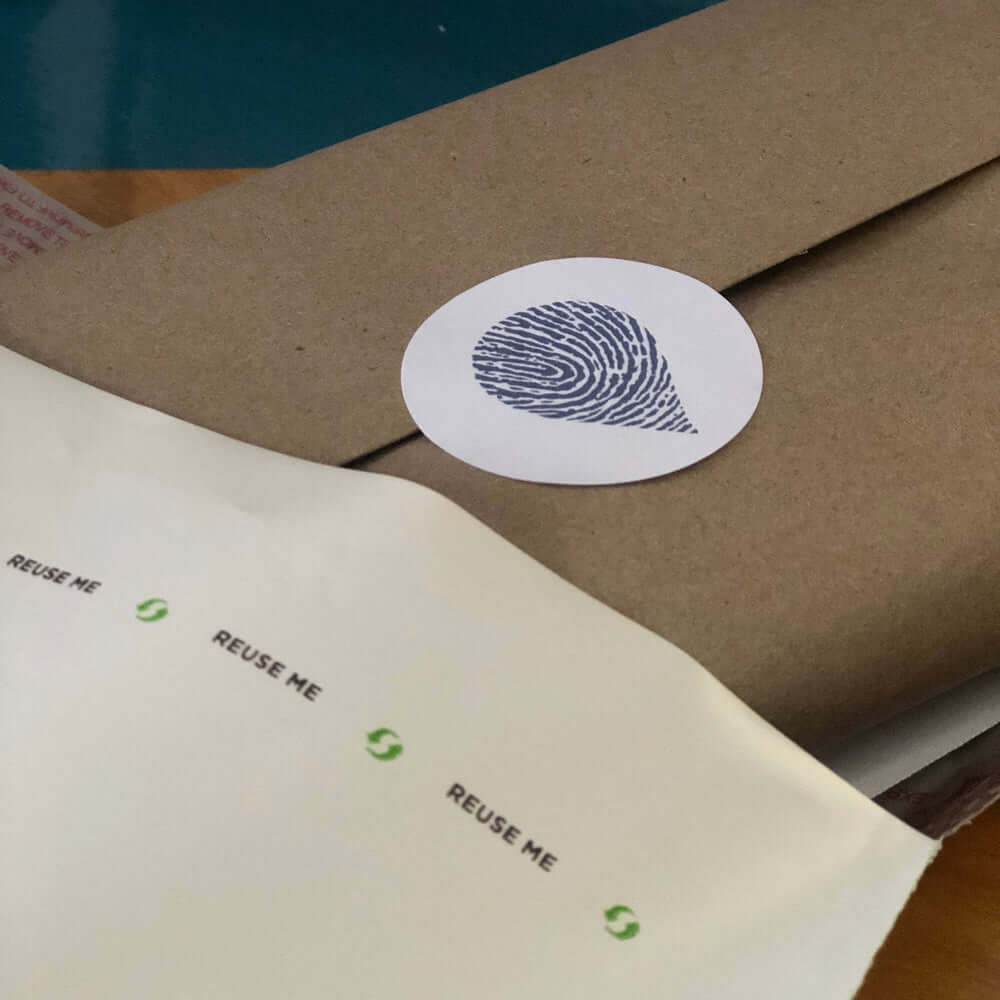
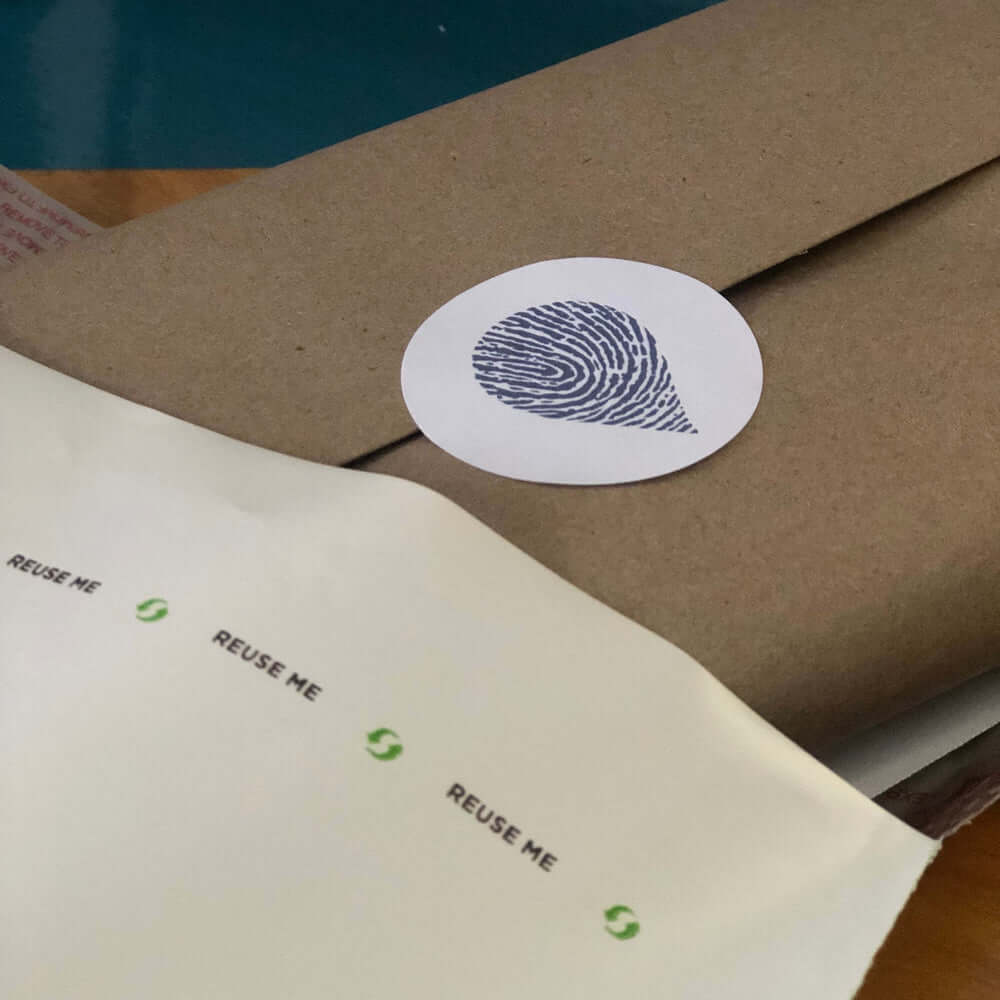
Once finished products are at our distribution center, we utilize minimalist packaging by storing products without individually wrapped poly bags, as is the norm, and instead we roll and tie them with hemp twine, utilizing a simple recycled kraft hangtag for labeling and barcoding. All orders ship in 100% recycled and recyclable mailers or boxes when necessary, most of which are made by EcoEnclose, another company with shared values that we are proud to support.
___________________
Transparency is important to us, and we hope this has been helpful in understanding our ethos of environmental responsibility and how we make our products here at Waterlust. If you have any questions, reach out to us at hello@waterlust.com.