Bringing Back the Green Abalone While Building Community
Written by: Nancy Caruso
|
|
Time to read 6 min
There are days in science that live in data sheets and lab notes—and then there are days that stay with you forever.
The day we returned green abalone (Haliotis fulgens) to Orange County waters was one of those days.
I’ve spent most of my life in the ocean. It’s where I feel most at home. As a marine biologist and founder of Get Inspired, I’ve dedicated my career to helping people fall in love with the natural world the way I did. Get Inspired’s mission is to inspire stewardship and curiosity for the natural world through the exploration of science.
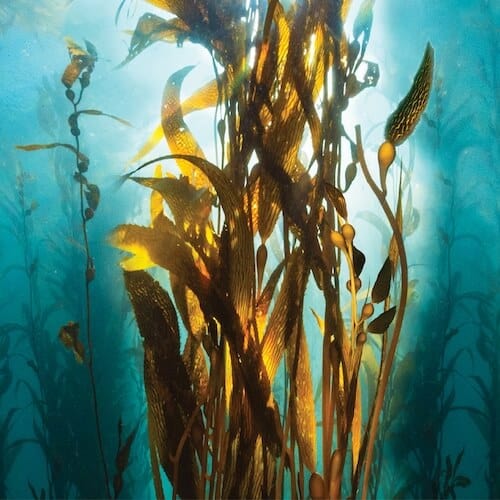
From 2002-2012, I taught 5,000 kids to grow giant kelp in their classrooms and trained 250 volunteer divers to restore it to the coast of Orange County, California. This model worked so well, I decided to continue It with the aim of getting the community involved in restoring other ocean species. Green abalone was the next species I targeted.
I take every opportunity to talk to people about abalone and the work that I do. How in one human lifetime, we nearly ate them to extinction but together, we can bring them back.
If you talk to divers who’ve been around long enough, they’ll tell you stories. Stories of reefs dotted with abalone, that’s hard to imagine now. But over time, through overharvesting, disease, and changing ocean conditions, they disappeared.
By 2004, they were listed as a “species of concern” by the National Oceanic and Atmospheric Administration. And for most people, that’s where the story would have ended.
But for me, that’s where it began.
Throughout the kelp forest restoration project, I had assembled a small but incredibly dedicated group of volunteer divers. We weren’t backed by big funding or flashy institutions, just a shared belief that the ocean was worth fighting for. In 2009, I decided that the next logical choice for restoration would be green abalone. We started surveying reefs, mapping habitats, and searching for signs of abalone reproduction. Not just green abalone, but any abalone. What we found was sobering.
The populations were so low that, the few individuals that were out there, likely couldn’t reproduce. Abalone need to be in within a meter of each other to successfully spawn. With such low densities, that meant, they were essentially sterile.
That realization changed everything.
We knew that if green abalone were going to come back, they would need help.
A beautiful green abalone just before we outplanted them.
We had to start from scratch; we had to find enough parents to make babies. We had to get permits to collect the parents and then get them to spawn. After four collection trips, eight spawning attempts, eight years of growth, and many negotiations with the California Department of Fish and Wildlife for outplanting permits, we planted our green abalone in December 2025 along the coast of Orange County, California.
As with all of our projects, we didn’t just focus on the science. We brought the story into classrooms and involved dozens of dive volunteers. Four thousand students learned to grow abalone in their classrooms. By caring for them, the kids learned ocean chemistry, how to care for abalone, abalone biology, their history, and what role they play in the ecosystem. Kids who had never seen the ocean suddenly cared deeply about what was happening beneath its surface.
Teaching a group of high school students how to be research divers on Catalina Island
And then there were the volunteer divers.
More than 80 volunteer divers committed themselves to this work. Just like the kelp restoration project, citizens who cared, stepped up to help. These are people with full-time jobs, families, responsibilities, some who travel an hour or more to go out with us. Early mornings, rough conditions, long days underwater. Not for recognition. Not for pay. Just because they believed in the mission.
That kind of commitment humbles you.
Abalone nursery in Warner middle school in Westminster, CA. Students learned how to make seawater, test water chemistry, and care for abalone in their classroom as I taught them abalone biology and kelp forest ecology.
After eight years of monitoring the reefs, mapping the habitat, and determining the best place to plant abalone we reached a point that once felt almost impossible. After lots of twists and turns we had captive-raised green abalone that were healthy, disease tested, and ready for outplanting.
Everything had to be right.
And then came the day.
We transported the 5 inch (8 year old) abalone to a carefully selected rocky reef habitat—one that offered the right conditions for survival and, hopefully, reproduction. I won’t share the exact location. Unfortunately, poaching is still a real threat, and protecting these animals is critical. Harvesting green abalone is prohibited everywhere, and we intend to keep it that way until populations can recover.
After our team surfaced from the last outplanting dives, I felt something I don’t think I’ll ever be able to fully put into words. We all looked at each other and felt relief, pride, so much gratitude
“This is an extraordinary day for California’s coastal ecosystems,” I remember saying. And I meant it. Not because the work is done, but because we proved something important.
We again showed that restoration is possible when people come together.
Outplanting day! Abalone were carried down to the bottom in these crates.
There were moments along the way when things didn’t go as planned. Times when progress felt slow, or uncertain, or completely stalled. That’s the part people don’t always see when they hear about a “successful” project. Only 57 abalone made it to outplanting after losing over 200 of them due to frigid La Nina temperatures in early 2025 and having to sacrifice 50 of them for health checks. This was a small step in the grand scheme of things. But also, a massive milestone. One that reflects years of setbacks, problem-solving, and persistence.
Science isn’t always clean or linear. Conservation definitely isn’t.
But what kept us going—what always keeps me going—is the people I get to work with. Kids and community citizens all came together around a common goal.
This project was entirely privately funded. It relied on community support at every level. Volunteers helped with monitoring, logistics, and preparation. Local supporters followed the journey, asked questions, showed up to events. They cared.
And when people care, things change.
All hands on deck for spawning day. Volunteers even helped with spawning into the wee hours of the morning.
We also worked closely with the California Department of Fish and Wildlife, aligning our efforts with the Abalone Management and Recovery Plan—an initiative designed to bring abalone populations back to self-sustaining levels across their natural range. This kind of partnership between nonprofits and public agencies is not easy, especially in California (Watch my TEDx talk for more). But no one group can do this alone.
The return of green abalone represents hope. Not just for this species, but for what’s possible when science and community come together with a shared purpose.
Will these abalone survive? Will they reproduce? Will we one day see thriving populations again?
Those questions don’t have answers yet, but we will be monitoring them and keep you updated. This project isn’t just about abalone, it’s about resilience. It’s about showing the next generation that they have the power to make a difference and we’re just getting started. If you want to be part of this journey, I invite you to join us at Get Inspired and check out Waterlust's abalone line of advocate apparel that helps fund our work. Abalone’s story isn’t finished—and neither is ours. We are planning to spawn wild green abalone again next year!
Nancy Caruso
Nancy Caruso is a marine biologist and the Founder and Director of the nonprofit organization Get Inspired. Her ocean restoration work in Southern California has been celebrated in Forbes, Nature World News, Scuba Diving Magazine, and dozens of other publications. Along the way, she’s been honored with awards including PADI Sea Hero, the NAUI Environmental Enrichment Award, Oceana’s Ocean Hero Award, and, most recently, induction into the Women Divers Hall of Fame.
As a fellow diver passionate about kelp restoration in the California coast, thank you so much for making OC apart of that process and all that you do. This thankless work isn’t easy but 10000% worth it and takes people like us to change the world, one invert or frond at a time!
I enjoyed reading about your research project and the impact it has on our ecosystem. I also support waterlust in their suits, leggings etc. I love what the organization is about! My daughter has a degree in marine biology and worked doing research in Alaska; she’s also a dive master and having much difficulty finding a job in south Florida. I didn’t realize how competitive a field it is and starting salaries low. Although her passion is diving, marine life and ocean conservation it is unfortunate to work in other areas. Any suggestions? Thanks much! As her mother I support what she does but I know where are strengths/ interests/ passion lie. Thanks again for your support in this worthwhile cause!
Hi! I grew up in Orange County…..until now I knew nothing about abalone in the waters offshore, though I loved going to the beach and diving in the waves. Thank you for the work you shared here in your story. I ran a Salmon Watch program where I live in Oregon, so I think I get the amount of work, low budget and volunteers it takes to make the program effective.
I enjoyed reading g your article and the work you do! As the mother of a marine biology major I have developed an interest in ocean conservation, diving and marine life rehab. My daughter is a dive master as well and seeing her pictures of sea life inspire me to support all research. My daughter is currently not working in her field and being disappointed in the lack of jobs, overly competitive jobs and not allowing recent grad’s opportunities to work in companies. We live n South Florida and after graduating in a state where oceans abound one would think differently. Any suggestions as I hate to see her lose something she is passionate about. Thanks again for your contribution to our underwater world! We love waterlust products and buy frequently to support the mission.
This is so amazing to hear Nancy, your work continues to inspire so many people. Thank you for all your do for our oceans 🩵